
Clinton Township, MI · Garage Door Service
Opener Installation for Clinton Township's Older Garage Doors
Clinton Township homes built mostly before 1960 run openers never designed for today's loads or Michigan cold. See why openers fail here and what installation actually involves.
- Repairs & new doors
- Springs & openers
- Serving 5 nearby communities
Why This Fails Locally
Clinton Township's housing stock runs from 1938 to 2002, with a median build year of 1957. That matters for openers because a house built in the 1950s or 60s was never wired with a dedicated garage circuit in mind, and the opener bracket, header, and door itself have usually been swapped at least once without anyone checking whether the original framing can still take the load. Across the 35 named areas that make up this service region, most of the stock predates 1960, which means a lot of garages still have the original wood jambs and headers an opener bracket was never engineered to carry.
Then there's the cold. This area sits in a severe cold climate band, and that's hard on opener hardware in ways people don't expect - nylon drive gears get brittle and crack, chain tension changes as metal contracts, and the capacitor that kicks the motor over on a cold morning is often the first thing to go. An opener that's been running fine for years will suddenly refuse to start on the first hard freeze, not because it broke overnight but because the cold finally found the weak part. Pair a 1950s header with a 20-year-old opener and a January cold snap, and you've got the exact failure pattern we see on repeat calls out here.
How It Shows Up
The most common call is an opener that hums or clicks but the door doesn't move - that's usually a stripped nylon gear inside the motor housing, and cold makes that gear more likely to crack rather than wear gradually. Close behind that: a door that reverses right after it starts closing, which often traces back to safety sensors that have drifted out of alignment, something that happens more in houses where the garage floor has settled over the decades.
You'll also see remotes that used to work from the driveway now needing you to stand right at the door. That's not always a dead battery - on older openers without rolling code, interference and antenna wear both get worse over time, and nobody's replaced the antenna wire because it's buried in the housing. In homes with the original 1950s or 60s framing, we also see brackets that have worked loose from the header entirely, which is a safety issue, not just an annoyance - a loose bracket under load is how a door comes down on something it shouldn't.
Doing It Yourself
Some of this is reasonable to handle yourself. Swapping a remote battery, cleaning the photo-eye sensors, and re-aiming them if they've drifted are all five-minute jobs with no tools beyond a screwdriver. Lubricating the chain or belt and checking that the travel limits are set right is also within reach for most owners.
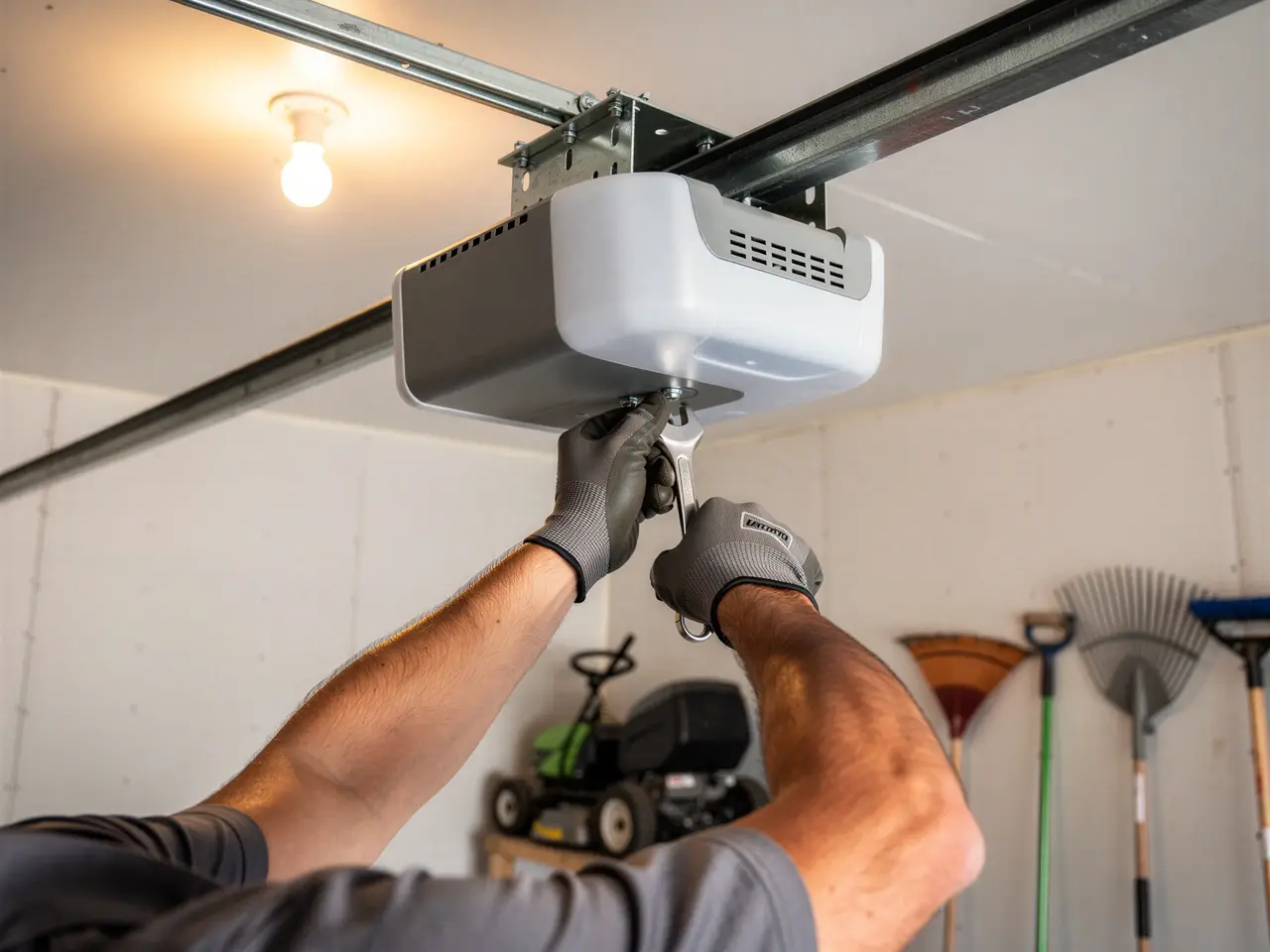
Where we'd stop you: mounting a new opener bracket into an old wood header. If the header is original to a house built before 1960, you're drilling into wood that's had 60-plus years to dry out and shrink, and a bracket that looks secure on day one can pull loose under the stress of daily cycling. We also don't recommend wiring in a new dedicated circuit yourself if the garage doesn't already have one - that's an electrical permit job, not a weekend project. If your opener is original to the house, the honest answer is usually replacement rather than repair; parts for openers that old are hard to source and not worth chasing.
What It Costs
We're not going to throw a number at you that doesn't account for your actual setup, because the variables here are real. A belt-drive opener costs more upfront than chain-drive but runs quieter, which matters more in houses where the garage sits close to a bedroom - common in this area's tighter 1950s and 60s lot layouts. Battery backup is worth asking about too, given how often winter storms here knock out power right when you need the door to open.
The bigger cost driver, honestly, is what's behind the drywall. A straightforward swap onto existing, sound brackets and wiring is one job. Discovering the header needs reinforcing, or that there's no dedicated circuit, turns it into a different job with more labor and material. We'll tell you which one you've got before we quote anything, not after.
Frequently asked questions
Why does my garage door opener only fail in winter?
Cold makes plastic and nylon parts brittle, and a nylon drive gear that's been slowly wearing down for years can finally crack once temperatures drop hard. It's also harder for an aging capacitor to kick the motor over in the cold, which is why a lot of opener calls spike with the first real freeze of the season.
Do I need a new bracket or header when I replace my opener?
Not always, but in houses built before 1960 it comes up often. If the original wood header has dried and shrunk over the decades, a new opener bracket can pull loose under regular use even if it looked solid on install day. We check the header before mounting anything new.
Is it worth repairing an original opener instead of replacing it?
If the opener is original to a house from the 1950s or 60s, usually no. Parts for openers that old are hard to find, and you'd be paying labor to chase down a part that may not exist anymore. Replacement is often the more honest answer at that point.
Will a new opener fix my door reversing on its own?
Sometimes, but not always. If the reversing is from misaligned safety sensors or a door that's out of balance, a new opener alone won't fix it - the sensors or the door hardware need attention too. We'd check that before assuming the opener itself is the problem.
Related services
By Neighborhood
Opener Installation across the Clinton Township area
We also handle opener installation in these Clinton Township-area suburbs.
Book garage door service in Clinton Township
Call now or request a quote - tell us what the door is doing and where you are.