
Clinton Township, MI · Garage Door Service
When the Opener Dies and the Power Goes With It
How Clinton Township's older housing stock and cold winters make openers fail during power outages, and what actually needs fixing versus replacing.
- Repairs & new doors
- Springs & openers
- Serving 5 nearby communities
The Problem
Clinton Township's housing mostly went up between 1938 and 2002, with the median build year landing around 1957, and pre-1960 construction dominates across the 35 named areas that make up this service territory. That matters for openers specifically: a house built in the 1950s wasn't wired or framed for a 3/4-horsepower belt-drive unit with battery backup. What you usually find is a chain-drive opener from an earlier replacement cycle, bolted onto track and header framing that's decades older than the motor itself.
The failure pattern we see isn't really about the opener's age - it's about the mismatch. A newer opener head on old rail, old brackets, or a header that's shifted slightly over sixty-plus years puts load on the unit it wasn't designed to carry. The motor works harder, the gear wears faster, and when a power outage hits mid-cycle, the door stops wherever it stopped - half-open, half-closed, with no graceful way down. On a lot of these older houses, that's also the only vehicle entry, which turns an opener problem into a household problem fast.
What the Weather Here Does to It
This area sits in a COLD-severe climate band, which means openers and the doors they drive take a different kind of beating than they would somewhere mild. Power outages here tend to cluster around the same events that stress the opener hardest - ice loading the door panels, wind pushing against the seal, cold stiffening the lubricant in the chain or belt right when the motor needs the most torque to break the door free.
An opener that's marginal in October usually fails in January. Cold makes plastic gears brittle, it thickens grease on the rail, and it's exactly when the grid is most likely to drop in this region. If your opener doesn't have battery backup - and a lot of units installed on these older Clinton Township houses don't - a winter outage means the door sits wherever it stopped, with no power to finish the cycle and no warm hands wanting to wrestle a frozen panel by rope and muscle.
What It Costs
We don't have pricing figures to quote here, and we're not going to guess at a number that doesn't hold up house to house. What we can tell you is what drives the cost conversation on a call: whether the opener itself failed or whether it's the track, the springs, or the wiring behind it that's actually the problem. On houses built in the 1938-2002 range that make up most of this area, it's common for a dead opener to be the symptom, not the cause - worn rollers or a tired spring forcing the motor to overwork until it burns out.
That's worth knowing before you replace anything, because swapping the opener without fixing what's straining it just buys you a shorter second life. A straight opener swap is a different job and a different number than an opener-plus-hardware job, and the only honest way to know which one you've got is to have someone look at the door under load, not just listen to the motor hum.
When to Call Someone
Call before the power outages, not during. If your opener is chain-drive, has no battery backup, and sits on a house from the pre-1960 wave that's common across this area, that's worth a look ahead of winter, not after the door's already stuck half-open in an ice storm. Same goes for grinding, hesitation, or an opener that runs longer than it used to to finish a cycle - that's added strain showing up before total failure.
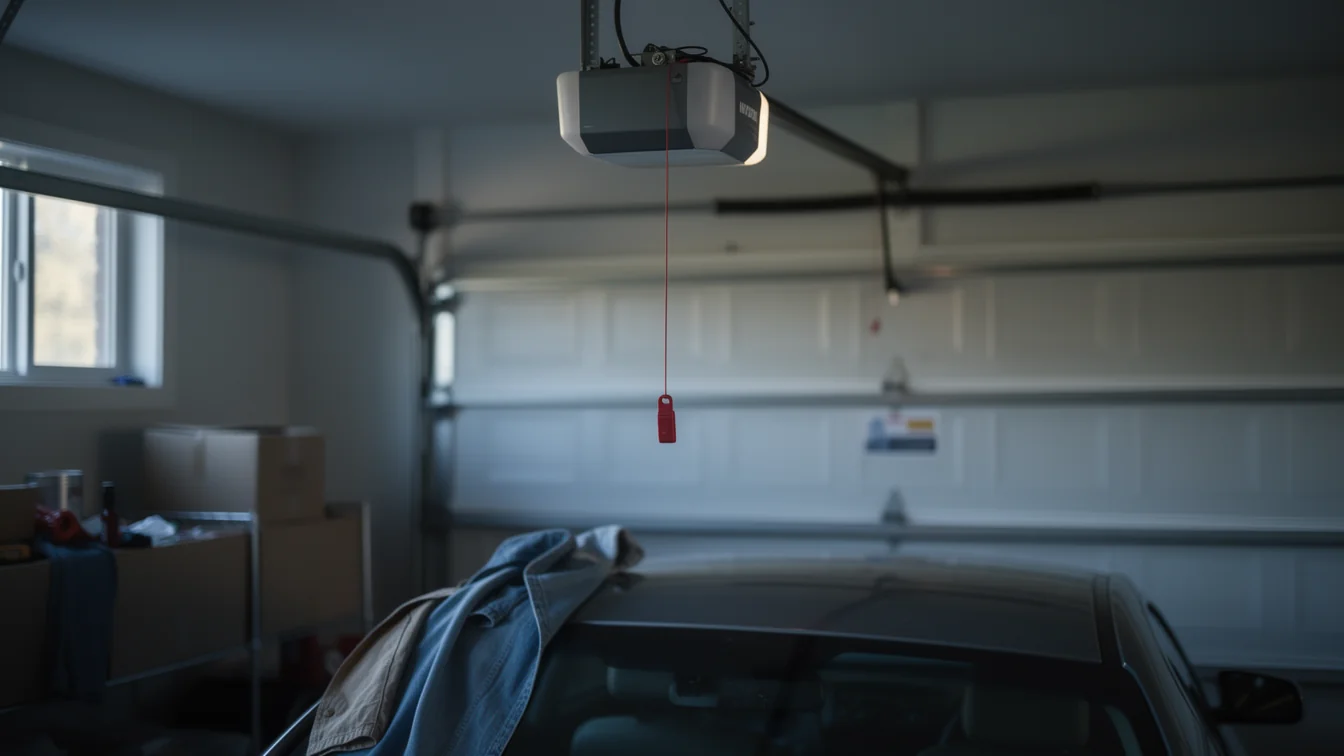
One honest limit: if your opener still has working manual release and the door moves fine by hand, you don't need an emergency call just because the power's out. That's the backup system working as designed. Where it's worth a call is when the release cord is frozen stiff, missing, or the door won't budge manually either - at that point you've got a door problem, not just a power problem, and that's not a DIY fix on a cold night.
Frequently asked questions
Why did my garage door opener die the moment the power went out?
Most openers without battery backup simply stop wherever they are when power drops - that's normal, not a malfunction. The bigger issue on older Clinton Township houses is when the manual release cord is also frozen or hard to reach, which turns a power outage into a lockout.
Is it the opener or something else failing?
Often it's not the motor at all. On houses from the 1938-2002 era that make up most of this area, worn rollers or a weak spring force the opener to overwork for months before it finally quits. Listen for longer run times or grinding before the failure, not just after.
Does cold weather really affect the opener itself?
Yes. In this COLD-severe climate band, cold stiffens chain and belt lubricant right when the motor needs the most torque to break a door free of ice or a stiff seal. That extra load is what pushes a marginal opener into failure during winter storms.
Should I add battery backup to an older opener?
It's worth asking about if your opener predates backup systems, which is common on the pre-1960 housing stock across this area. We can look at whether your current unit supports an add-on backup or whether the opener itself is due for replacement first.
Related garage door services in Clinton Township
More garage door guides
Book garage door service in Clinton Township
Call now or request a quote - tell us what the door is doing and where you are.