
Clinton Township, MI · Garage Door Service
Why Your Garage Door Lets the Cold In
Clinton Township homes built mostly before 1960 lose heat fast through worn garage door seals. Here's what the cold does and what fixing it runs.
- Repairs & new doors
- Springs & openers
- Serving 5 nearby communities
The Problem
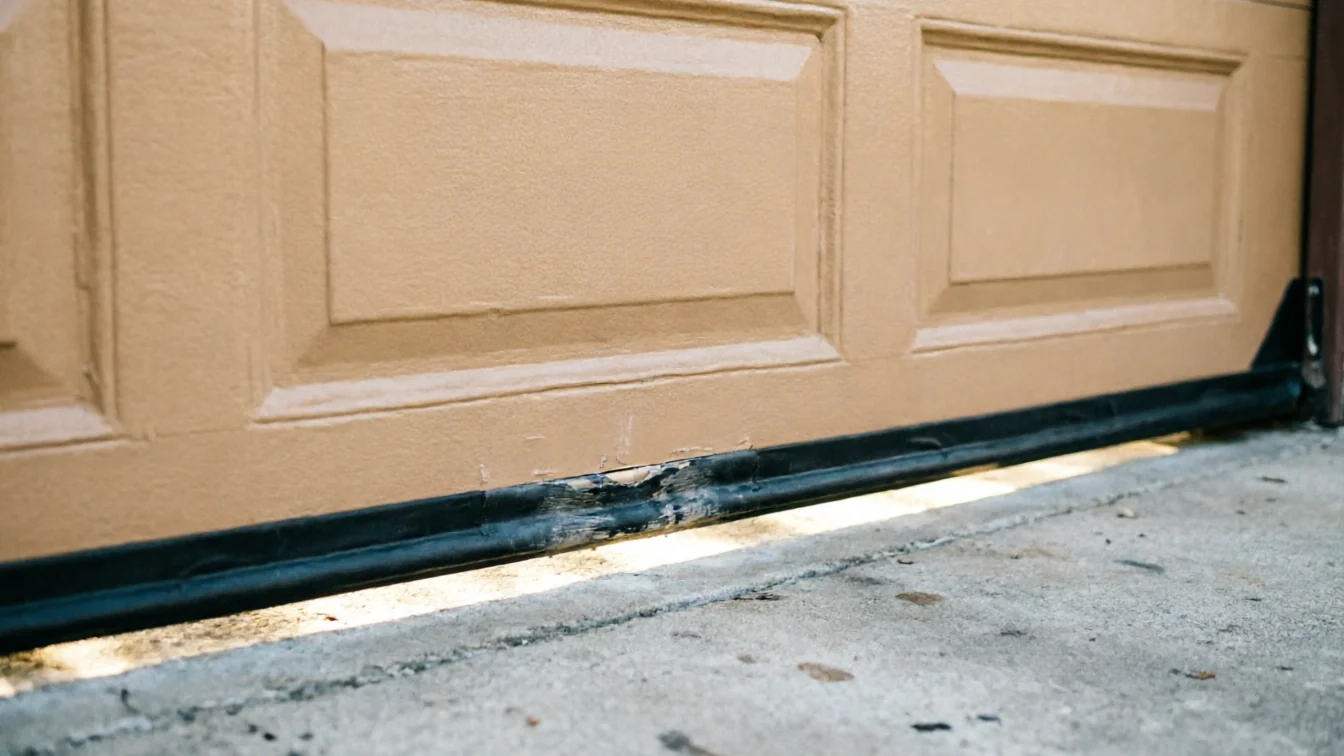
Most of the houses on this side of Clinton Township went up between 1938 and 1957, with the bulk of the stock clustered around that median year across the 35 named areas nearby. A door and frame built for that era wasn't engineered with today's foam-core panels or dual-durometer bottom seals in mind. Over sixty-plus years, the wood jambs around those openings have shifted, the stop molding has shrunk, and the seal channel that once sat flush against the slab now has gaps you can slide a finger through. You don't notice it in July. You notice it in January, when the floor near the door stays five degrees colder than the rest of the garage and the bottom of the door has a visible bow of daylight at each corner. That gap isn't cosmetic. It's air moving through a conditioned space, and in a house this age, it's usually been moving through there for decades before anyone thought to check it. The fix isn't always the seal itself - sometimes the door has racked enough that no seal will close the gap until the track and hinges get reset first.
What the Weather Here Does to It
This area sits in a cold-severe climate band, and that matters more for a door this old than for a new one. Repeated freeze-thaw cycles work on old vinyl bottom seals until they crack and lose their shape, usually at the corners first since that's where the seal takes the most flex. On pre-1960 doors without a thermal break in the panel itself, condensation forms on the inside face during cold snaps and drips down into the bottom seal track, which speeds up the rot in wood jambs that are already past their service life. Drafts pull in moisture along with cold air, so a garage with a bad seal in this climate doesn't just run cold - it runs damp, and that's what eventually swells the door panel or rusts the bottom bracket. None of this is dramatic on its own. It's cumulative, and on housing stock with a median build year in the late 1950s, that cumulative wear has had a long time to work.
What It Costs
We don't have a flat number to quote you here, and we're not going to make one up. What drives the cost on a job like this is whether you're replacing a seal and some weatherstripping or dealing with a frame that's racked enough that the seal alone won't solve it. On a house from the 1938-1957 build range, it's common to find both - a worn bottom seal and a jamb that's moved just enough to need shimming before the new seal will sit flush. A straight seal swap is a small job. Reframing the stop molding or resetting a door on worn rollers to get it sitting square again is a bigger one, and it's worth knowing the difference before you call, because a quote for
When to Call Someone
placeholder
Related garage door services in Clinton Township
More garage door guides
Book garage door service in Clinton Township
Call now or request a quote - tell us what the door is doing and where you are.