
Clinton Township, MI · Garage Door Service
What Older Doors in Clinton Township Are Actually Up Against
Clinton Township homes mostly predate 1960 and insulation codes; here's what that means for garage doors in Michigan winters and what repairs actually run.
- Repairs & new doors
- Springs & openers
- Serving 5 nearby communities
The Problem
Housing in this area was built mostly between 1938 and 2002, with a median build year of 1957. That one number explains most of the service calls we run. A door hung in the 1950s or 60s went up before insulation codes required a thermal break in the panel, before vapor barriers were standard, and often before steel doors existed at all on that house - a lot of these started as wood panel doors that got swapped for a steel replacement at some point, on hardware that was never upgraded to match.
The result is a mismatch you see over and over: a newer door skin on an older track and spring setup, or an original door that's heavier than anything made today because the steel gauges and insulation foams changed over the decades. Neither problem shows up as a dramatic failure. It shows up as a door that's slow to open, that binds halfway up, or that a spring that was sized for 1962 can no longer lift without strain. This isn't a defect in the door. It's a door doing a job it was built for in a different era, on a house that's now 60-plus years into settling, framing shift, and slab movement that changes the opening's square.
What the Weather Here Does to It
This area sits in a severe cold climate band, and that matters more for an older door than a new one. Steel contracts in deep cold, and on a panel from the 1950s or 60s - thinner gauge, less or no foam core - that contraction is more pronounced. Springs lose a measurable amount of lifting power as temperature drops, and a spring that's already fatigued from decades of cycles has less margin to give before it snaps.
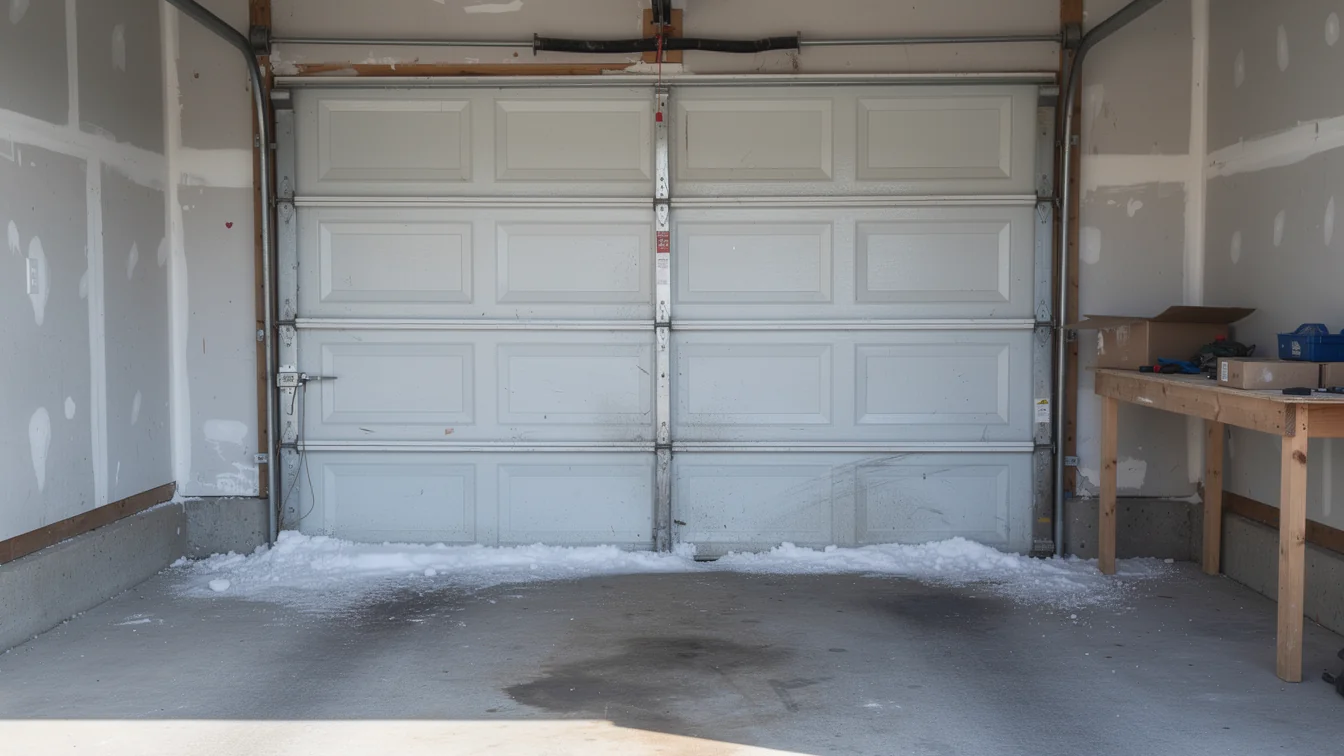
Condensation is the other piece. A door with no vapor barrier, which describes most of the pre-1960 stock in this area, sweats on the inside face when warm garage air meets a cold steel panel. Over enough winters that moisture finds the bottom rollers, the track bolts, and the bottom seal track, and that's where we find rust that isn't visible until the track starts binding. None of this is unique to any one house - it's what cold does to steel and hardware that's old enough to have outlived its original coatings and lubricants.
What It Costs
We don't have a flat number to put here, and giving you one would be guessing. Cost on an older door depends on what's actually wrong - a single torsion spring is a different job than a full panel replacement, and a door built before standard sizing was common sometimes needs hardware sourced to match an opening that isn't a stock width. That's the honest limitation: on some of the oldest doors in this area, we're ordering parts rather than pulling them off a shelf, and that adds time to the job.
What we can tell you is what drives the number up or down. A spring or cable repair on standard hardware is the cheapest fix there is. A full section replacement costs more the older the door, because matching panels gets harder every year. And a full tear-out and replacement, while it costs more up front, often makes more sense than keeps repairing a door whose track, springs, and panels are all original to a house built decades before current households - median income here runs $85,229 across 151,046 owner-occupied homes - had any of today's energy-code options to choose from.
When to Call Someone
Call before the spring goes, not after. On a door that's original to a house from the 1950s or 60s, a spring under strain usually gives some warning - a door that's noticeably harder to lift by hand, or an opener that strains and stalls partway up. That's the window to get it looked at, not the week it actually snaps and the door comes down on its own weight.
Call right away if you hear a loud bang from the garage and the door won't move - that's very likely a broken spring, and running the opener against it can strip the gears or bend the track. And call if you notice rust at the bottom rollers or the track brackets pulling away from old framing; on a house built before insulation rules, that framing has had decades to shift, and a track that's slightly out of plumb puts uneven load on a spring system that was never over-built to begin with. If the door is original to the house, it's worth asking whether repair or replacement makes more sense before putting more money into hardware that's past its working life.
Frequently asked questions
Is it normal for an older garage door in Clinton Township to feel heavier than a new one?
Often, yes. A lot of the pre-1960 housing stock in this area has doors with thinner steel or solid wood construction and no foam core, which makes them heavier to lift by hand than a modern insulated door. If it's gotten noticeably heavier recently, that's more likely a spring losing lift than the door itself changing.
Why does my door sweat on the inside in winter?
Condensation happens when warm garage air meets a cold steel panel, and it's more common on older doors built before vapor barriers were standard. Over years, that moisture can work into the bottom rollers and track hardware and cause rust you won't see until the track starts binding.
Should I repair or replace a door that's original to the house?
It depends on what's failing and how available parts are for that era of door. A single spring or cable job is usually worth repairing. If the panels themselves are original and matching sections is hard to source, replacement often ends up cheaper than a string of repairs on hardware that's decades past its design life.
Related garage door services in Clinton Township
More garage door guides
Book garage door service in Clinton Township
Call now or request a quote - tell us what the door is doing and where you are.