
Clinton Township, MI · Garage Door Service
Garage Door Service for Clinton Township's Older Housing Stock
Clinton Township homes built mostly before 1960 carry original garage door hardware. See why springs, tracks, and openers fail here and what a real fix involves.
- Repairs & new doors
- Springs & openers
- Serving 5 nearby communities
Why This Fails Locally
Clinton Township's housing stock runs from 1938 to 2002, with a median build year of 1957, and across the 35 named communities in this service area most of the garage doors still standing are original to homes built before 1960. That matters because a door from that era was built for a different climate expectation than what we actually get. This area sits in a severe cold band, and steel contracts hard in a deep freeze. A torsion spring wound forty, fifty, sixty years ago has already given up a lot of its temper before the first cold snap of any given winter even hits. Add a slab that's heaved a few millimeters over six decades and you've got a track that was plumb in 1957 and isn't anymore. None of this is a defect in the door. It's just what happens when 1950s steel and hardware spend seventy winters in a freeze-thaw cycle. Newer subdivisions built after 2000 see less of this, but they're the minority of the stock here, not the rule. The failure mode we see most isn't random - it's the predictable end point of old hardware meeting a cold climate it was never going to outlast.'
How It Shows Up
The first sign is usually the door getting heavy to lift by hand, or the opener straining and reversing partway up - that's a spring losing tension, and in a pre-1960 house it's often the original spring or a replacement that's also decades old. Cold mornings make it worse: hardened grease on the rollers and track doesn't move the way it did in July, so you'll hear more grinding and see more hesitation right when the temperature drops. Another pattern specific to this housing stock is panels that have started to separate slightly at the seams, because steel doors from that build era used thinner gauge material than what's made today. If your door slams the last foot instead of settling, or the cables look frayed at the bottom roller, that's wear accumulating on original hardware, not a sudden break. We also see a lot of openers original to a 1960s-70s install that simply reach end of life around now - the gears wear out, not the motor, and by this point replacement parts for that specific unit usually aren't made anymore.
Doing It Yourself
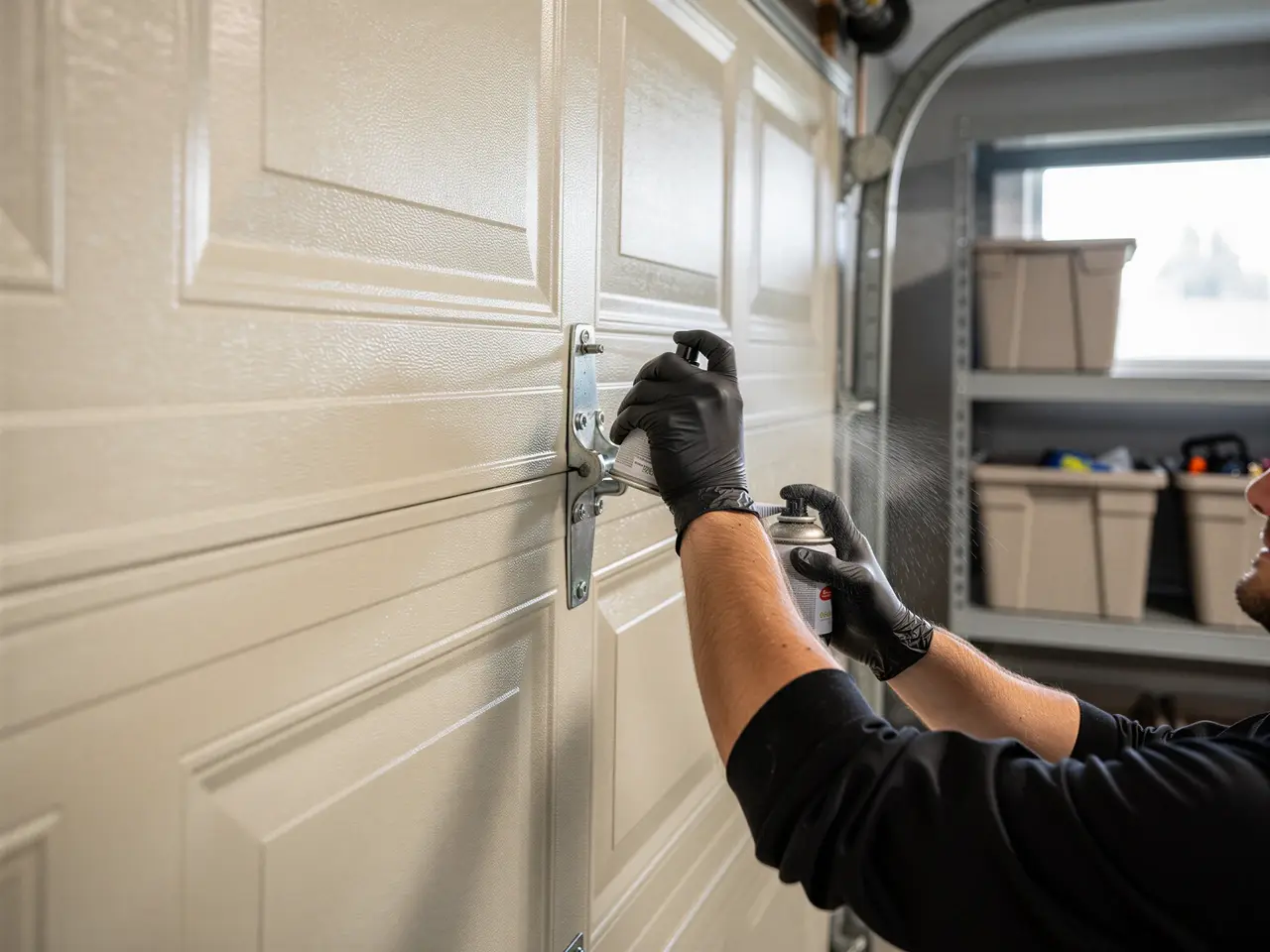
There's real maintenance a homeowner can do safely: wipe down and lubricate the rollers and track with a garage-door-specific lubricant (not WD-40, which washes grease out rather than replacing it), check that the weatherstripping at the bottom panel hasn't cracked from age and cold, and tighten any visibly loose hinge bolts. All of that is reasonable and worth doing once or twice a year, especially before winter sets in.
What you should not do yourself is touch the torsion spring. On an older door, that spring has been under full tension for decades, and the hardware holding it - especially original hardware from a 1950s or 60s install - can be more fatigued than it looks. A spring failure under load is one of the more common ways people get seriously hurt working on their own garage door, and it's not a job where a tutorial substitutes for the right winding bar and experience. If your door's spring looks stretched, gapped, or rusted through, that's a call, not a weekend project.
What It Costs
We can't post a number here that would mean much, because the honest answer depends on what's actually failed and how old the door is. A door original to a 1950s or 60s Clinton Township build sometimes needs a part that simply isn't manufactured anymore, which changes the job from a repair to a full section or door replacement - and that's a different conversation than swapping a spring on a ten-year-old door. What we can tell you is that age of the hardware is the biggest driver of cost here, more than the brand or the size of the door. If you want a real number, that comes from someone looking at your actual door, not a general estimate posted on a page.
Frequently asked questions
Why do garage doors in Clinton Township seem to fail more in winter?
A lot of the housing stock here dates to the 1950s, and this area sits in a severe cold climate band. Steel hardware that's decades old loses tension and flexibility faster once temperatures swing hard, so the first real cold snap of the season is often when a tired spring or stiff track finally gives out.
Is it worth repairing an original door from a 1950s or 60s house?
Sometimes. If the panels and track are sound and it's just a spring or opener issue, repair makes sense. If the door itself has thin, separating panels typical of that build era, replacement is often the more practical call. It depends on what's actually wrong, not the door's age alone.
Can I lubricate and adjust my own garage door?
Yes, for rollers, hinges, and track lubrication - that's safe maintenance. Do not attempt to adjust or replace a torsion spring yourself. It's under heavy tension and older hardware can fail unpredictably under load.
Do you serve areas near Clinton Township, like Mount Clemens or Fraser?
Yes. Mount Clemens is about 2 miles away and Fraser about 4 miles, both within the area we cover along with Roseville, Utica, and Macomb.
By Neighborhood
Garage Door Service across the Clinton Township area
We also handle garage door service in these Clinton Township-area suburbs.
Book garage door service in Clinton Township
Call now or request a quote - tell us what the door is doing and where you are.