
Clinton Township, MI · Garage Door Service
Opener Installation for Fraser's 1970s Garage Stock
Fraser's housing stock centers on 1972, a decade and a half newer than the rest of the service area. Here's what that means for opener installs and swaps.
- Repairs & new doors
- Springs & openers
- Serving 5 nearby communities
What the Fix Involves
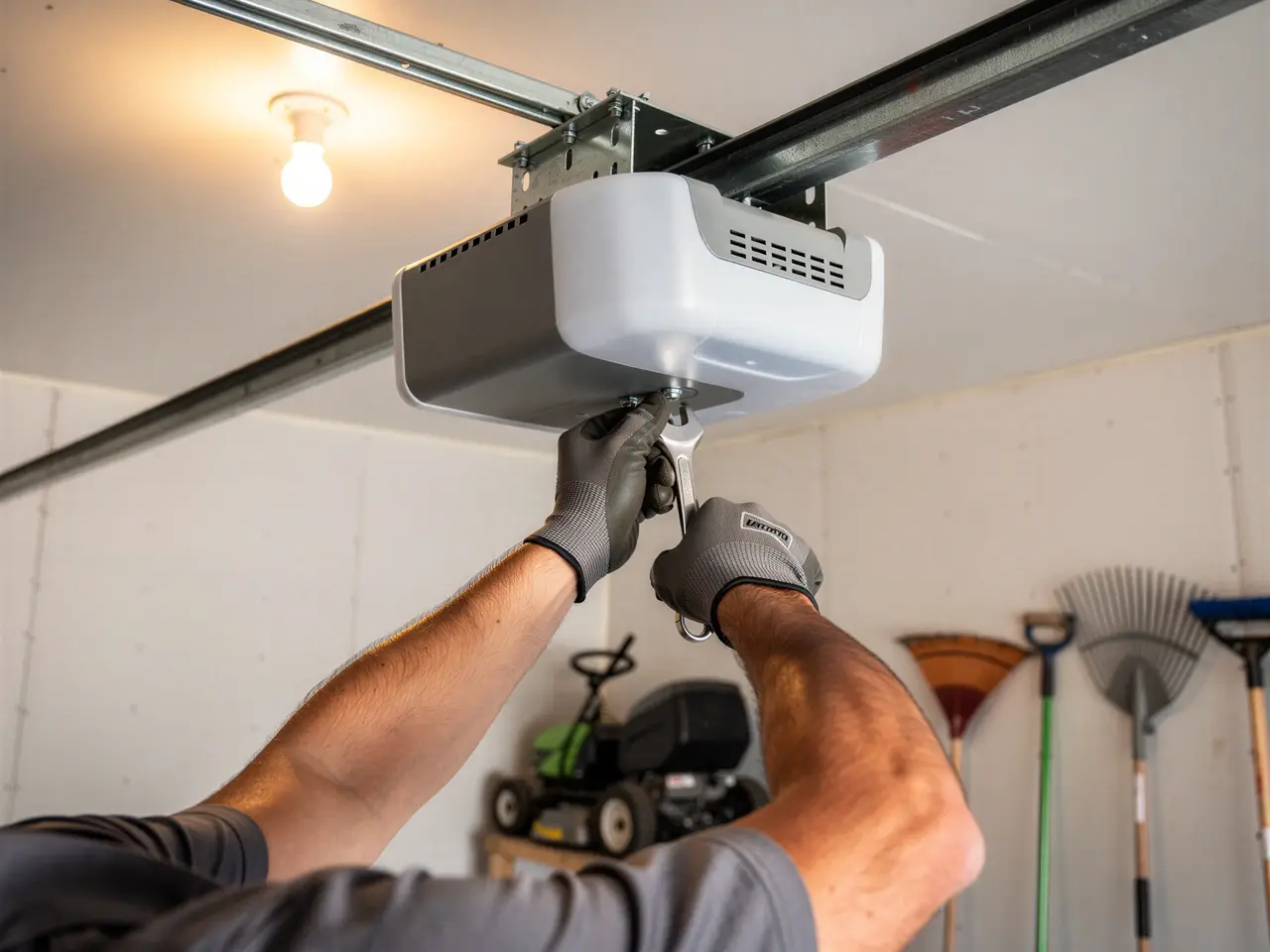
Fraser's housing stock centers on 1972, a good fifteen years newer than the median year built across the rest of the Clinton Township service area, which runs closer to 1957. That gap matters here. A house built in the early-to-mid 70s usually came with a chain-drive opener rated at a third of a horsepower, no battery backup, no rolling code, and a wall console wired straight through without a modern safety circuit. If that unit has never been swapped, it's likely still the original. A lot of them are. Installing a new opener in one of these garages isn't just bolting a new box to the header - it means pulling old low-voltage wire that was never meant to carry a safety sensor circuit, checking whether the header has enough clearance for a modern rail, and in some cases moving the wall control to a spot that actually meets code now. We size the opener to the door - weight, spring type, and whether it's a single or double - rather than defaulting to whatever horsepower sounds biggest. An oversized opener on an old door just stresses hardware that's already fifty years into its service life.
What It Costs
We don't post opener prices for Fraser on this page, because what you pay depends on horsepower, drive type, whether you want battery backup, and whether the existing wiring and header need rework before a new unit goes in - and none of that is a number we'll guess at sight unseen. What we can tell you is what drives the cost up in a neighborhood like this one: rewiring an old console circuit, replacing a bent or undersized header bracket, and reinforcing a door that's heavier than the opener it originally came with. If your garage still has the original opener from a 1972-era build, expect the quote to include at least some of that rework, not just the unit itself.
Doing It Yourself
Swapping a wall console or reprogramming a remote is reasonable DIY territory. Pulling and replacing the opener itself, on a house this age, usually isn't - not because the mechanical part is hard, but because the safety sensor wiring and the mounting into an old header often need more than a new bracket. If the existing opener predates safety reversal sensors, which plenty of units from the early 70s do, that's not a corner to cut to save a service call. We'd rather tell you that up front than have you find out the hard way. Where we draw the line: anything involving spring tension, anything involving a header that's already showing stress cracks, stays with us.
Stocked Parts
Because households across this part of the service area run older - most of the stock predates 1960, with Fraser sitting newer at 1972 - the trucks coming out of Clinton Township carry the belt and chain hardware, wall consoles, and safety sensor kits that match openers from that build era, not just the newest models. That means a tech showing up to a Fraser job usually has what's needed to finish without a return trip for a part that only fits a house built in 1972 rather than 1995. We don't stock every obscure bracket ever made, and a genuinely rare rail length can mean a short wait, but the common stuff for this era's garages rides on the truck.
Where This Job Goes Sideways
The trouble spot in Fraser isn't the opener - it's what's behind the wall. A 1972-built garage sometimes has a header that was never sized for a heavier insulated door someone added later, or wiring that's been patched more than once without being brought up to current code. We've also seen wall consoles mounted inside the reach of a child because that wasn't a code concern when the house went up. None of that shows on the opener itself until we're mid-install and find it. When it happens, we tell you before we keep going, not after.
How It Shows Up
Most calls start the same way: the door reverses for no clear reason, the chain has gone slack and the door opens crooked, or the remote works from inside the car but not from the street. On a 1972-era opener, grinding or a motor that hums without moving the door usually means the gear has worn through - common on units that have been running that long without the belt or chain ever being replaced. If the wall console lights up but nothing happens at the motor, that's often the old low-voltage wire finally failing rather than the opener itself.
Frequently asked questions
Is my opener in Fraser likely original to the house?
If your home was built around 1972 and the opener has never been replaced, yes, it's plausible. A lot of houses from that era in Fraser are still running their first unit, usually a chain-drive model without battery backup or modern safety sensors.
Do you install openers in Fraser out of a local branch?
No - we run this job out of Clinton Township, about four miles away. There's no separate branch or depot in Fraser, just a truck coming over for the install.
Can I keep my old opener and just add battery backup?
Sometimes, if the unit is in good mechanical shape and the wiring supports it. On openers old enough to predate safety reversal sensors, though, we'll usually recommend replacing the whole unit rather than retrofitting one.
Will you know if my garage needs rewiring before you start?
Not always until we're on site. Houses from Fraser's 1972-era build sometimes have wall console wiring that was never meant to run a safety circuit, and that only becomes clear once we open things up.
Book garage door service in Clinton Township
Call now or request a quote - tell us what the door is doing and where you are.