
Clinton Township, MI · Garage Door Service
What We Check First on a Clinton Township Garage Door
A look at what a garage door technician checks first in Clinton Township, where most houses date to 1957 and the climate band is cold-severe.
- Repairs & new doors
- Springs & openers
- Serving 5 nearby communities
The Problem
Most of the calls we get start the same way: the door doesn't go up, or it goes up crooked, or it makes a noise it didn't used to make. Before we touch a spring or a cable, we look at the year the house went up. Clinton Township's housing stock runs from 1938 to 2002, with a median build year of 1957, and that number tells us more than the homeowner's description of the noise does. Across the 35 named areas that make up this market, most of the stock predates 1960, which means a lot of garages still have original jamb framing and hardware that's been retrofitted at least once, sometimes twice, by whoever owned the house before.
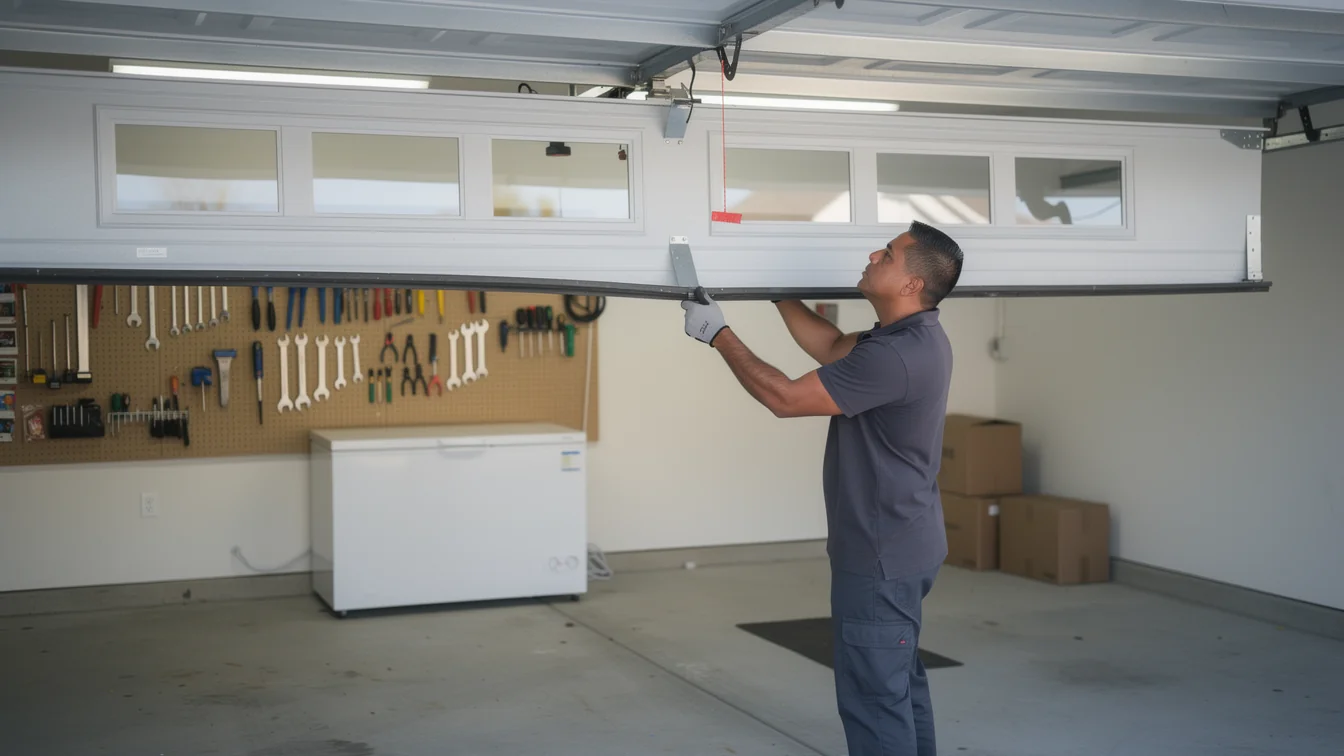
That history matters because a spring, cable, or roller swapped in during a 1980s retrofit doesn't always match what's bolted to the header now. We check the hardware generation before we check the symptom. A sagging section on a door that age could be the panel, the track alignment, or just fatigue in a spring that's outlived its rated cycles. We don't guess - we open the panel below the spring, check the winding cone, and look at how the cable sits in the drum before we say a word about what's wrong.
What the Weather Here Does to It
Clinton Township sits in a cold-severe climate band, and that changes how steel behaves before it changes how you feel walking out to the car. Torsion springs lose a measurable amount of tension as temperature drops, which means a spring that was marginal in October can snap in January under the same load it handled all summer. We check spring condition differently in cold months - looking for metal fatigue, not just visible wear, because cold steel fails without much warning.
We also check the track for ice buildup at the base, where meltwater off the door refreezes overnight and throws the rollers out of alignment by a few degrees you can't see but the opener motor can feel. Weatherstripping on older doors in this climate tends to crack and lose its seal faster than the door itself ages, so we check the bottom seal and side stops even on calls that have nothing to do with weather. An opener struggling in cold weather is often a lubrication problem, not a motor problem - we check that before we recommend replacing anything.
What It Costs
We don't post prices for spring jobs or opener swaps on this page, because the honest answer depends on what's on the door once we're standing in front of it - and on hardware this old, that varies house to house even on the same street. What we can tell you is how we think about it. With 269,335 households and 151,046 owner-occupied houses across the service area, parts stocked for one era of door don't always fit the next, and older torsion setups sometimes need a part ordered rather than pulled off the truck. That's a real limitation - we won't quote a firm number over the phone for a door we haven't inspected, because doing so on hardware this mixed means someone ends up disappointed.
At a median household income of $85,229, most owners here want a straight answer on repair versus replacement before any work starts, not a sales pitch. We check whether the track, hardware, and opener are worth building around, or whether the honest move is a new door section by section. That call gets made at the house, with the door open, not before.
When to Call Someone
Call before the spring fully lets go, not after. A door that's gotten noticeably heavier to lift by hand, or that drops the last foot instead of settling, is telling you the spring is near the end of its life - and on a house built in the 1950s or 60s, that spring may be original equipment or a mismatched replacement from decades back. Either way, that's not a DIY adjustment; a torsion spring under load can do real damage.
Also call if the opener reverses for no reason, especially in cold months - that's often a safety sensor or alignment issue, and in a cold-severe climate it shows up more in winter because of how the metal and seals contract. If the door is visibly off-track, stop using the opener and call rather than forcing it through another cycle. We'd rather look at a door that turns out to be fine than get called after a cable's already come off the drum.
Frequently asked questions
Why does my garage door spring break more in winter?
Cold steel loses some of its flexibility, and Clinton Township sits in a cold-severe climate band, so a spring that's been marginal for months often fails once temperatures drop. We check spring tension differently in winter calls for that reason - looking for fatigue, not just visible stretching or rust.
My house was built in the 1950s - does that affect what's wrong with my door?
Often, yes. A lot of Clinton Township's housing dates to right around 1957, and garages from that era have usually had hardware swapped or added over the decades. We check what generation of hardware is actually on the door before diagnosing the noise or symptom you're calling about.
Can you give me a price over the phone?
Not a firm one. Hardware on older doors in this area varies enough house to house that a phone estimate risks being wrong. We'll give you a realistic range based on what you describe, but the real number comes from looking at the spring, track, and opener in person.
Related garage door services in Clinton Township
More garage door guides
Book garage door service in Clinton Township
Call now or request a quote - tell us what the door is doing and where you are.